
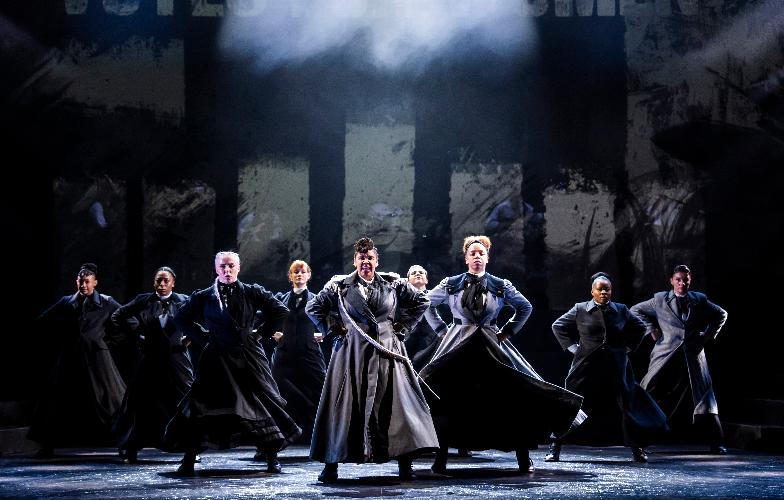
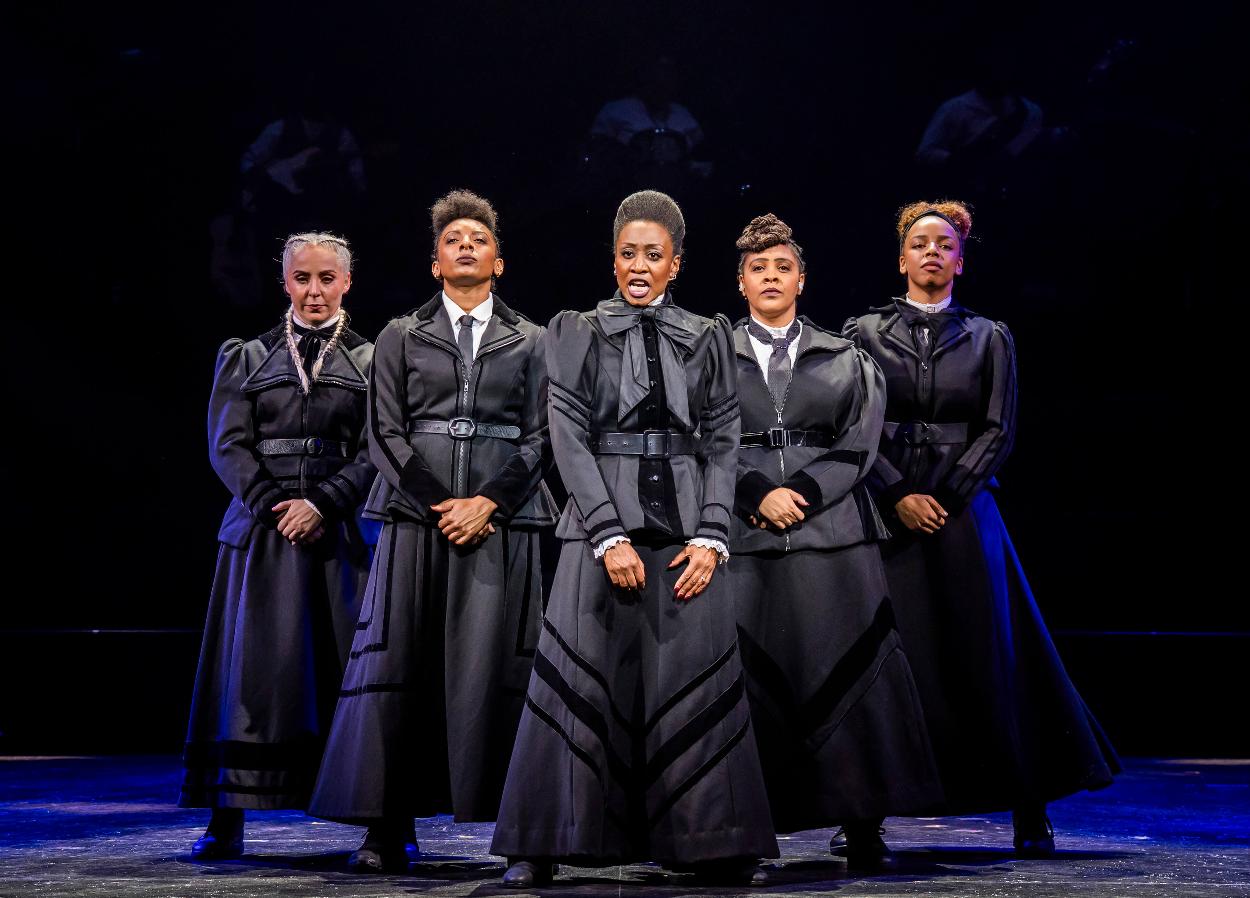
Sylvia - A Musical Revolution bursts to life at the Royal Albert Hall with an electric cast and a powerful tale of rebellion, determination, and resilience. The eponymous protagonist, Sylvia Pankhurst—played brilliantly by Naomi Katiyo—guides us through the history of the Suffragettes under the rule of her mother, Emmeline Pankhurst, played by Beverley Knight, who couldn’t be cast better for such a commanding role. Knight owns the stage and fills the entire hall so effortlessly that she leaves the audience silenced, especially during her impressive belts. Meanwhile, Naomi Katiyo is tremendous as Sylvia, bringing grace and confidence to everything she does—she is certainly one to watch in future performances.
Kate Prince—serving as Co-Writer, Lyricist, Director, and Choreographer—crafts an incredibly ambitious and challenging production. Condensing 25 years of a historically accurate retelling of the Suffragette movement is commendable, spanning from its inception in 1903 through to its penultimate victory in 1918 (the Representation of the People Act) and the subsequent act allowing all individuals over the age of 21 to vote in 1928. The plot moves relatively fast, yet it often prioritises narrative momentum over character development, inner turmoil, and the interpersonal conflicts between the figures. The songs, albeit impressively musically directed by Sean Green, often feel quite similar to one another. While no individual number is flawed, the show lacks a power ballad to shift the pace and offer deeper insight into another character’s conflict, which would heighten the dramatic tension. One easily walks away from the 2.5-hour show struggling to recall more than three distinct songs, even though the numbers themselves are wonderfully entertaining and elevated by diversely imaginative choreography.
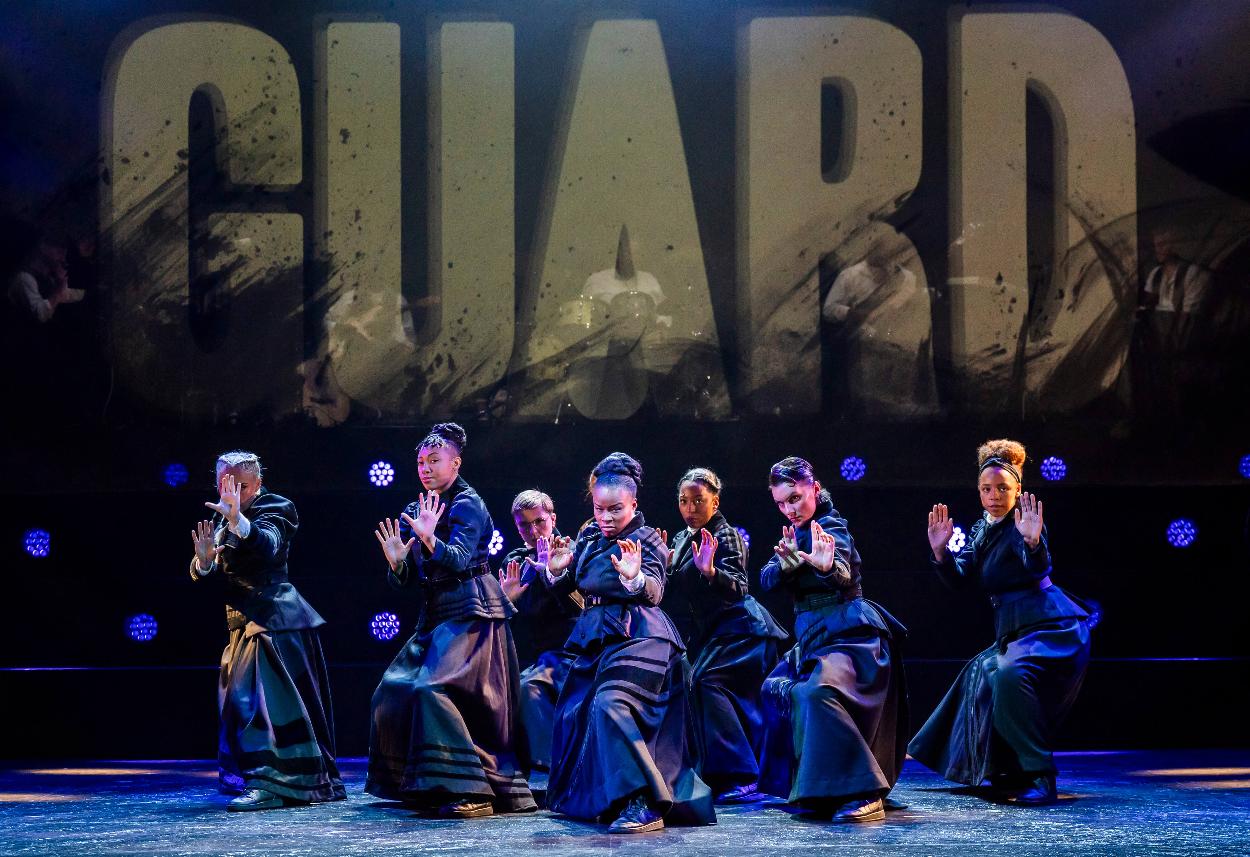
Sylvia is supported by an exceptionally strong cast and ensemble who throw all their energy into the fabulous choreography. The movement and blocking across every scene prove that Kate Prince is an astounding director and choreographer. Sylvia has previously toured across the UK at smaller venues, yet Prince’s direction and choreography scale up to the grandeur of the Royal Albert Hall tremendously.
This production is wonderfully original, though it is difficult not to compare it to the work of Lin-Manuel Miranda, such as Hamilton—there is even an exclamation of “WORK” during Sylvia! Alongside this, the show clearly draws inspiration from both US and UK rap artists, including Eminem and Dizzee Rascal. A quick “My Name Is” and a “Fix Up, Look Sharp” are welcomed and brilliantly placed; these references pay homage to the show's musical inspirations while creating something fresh and fun.
The set and costume design by Ben Stones clearly fits a specific brief of being period-appropriate and minimalist. However, imposing the creative constraint of dressing all characters in black, white, grey, and beige makes the production feel rather bland and bleak at times. Artistically, this aligns with the plot and the historical era, yet there seems to be little visual evolution; for a 2.5-hour show backed by an all-black-box set, the production feels like it needs a greater visual lift. Hamilton achieves a unique and colourful aesthetic while still serving its story, and this is an area that could be revisited here. Fortunately, the staging is greatly elevated by sharp, crisp lighting design from Natasha Chivers and Hector Murray, accompanied by impactful video design from Andrzej Goulding.
Special mentions among the cast must also go to Collette Guitart as Clementine Churchill; with a wonderfully soulful and controlled voice, she exudes poise and grace opposite her counterpart, Castell Parker as Winston Churchill. Parker is a spectacle as Churchill, donning a doo-rag—a version of Churchill never seen before, yet one that should be seen by many—finding the comedy in all the right places alongside the intimidation necessary for the plot.
Overall, this production is original, bold, and inventive in many ways. It deserves to be seen by as many people as possible, and it is a relief to know it has further venues lined up to perform in.
Review : Anthea Arpad Photos: Tristram Kenton