
Here is the proofread and revised text, with all descriptions of the production, performances, writing, and design shifted consistently into the present tense (reserving past tense only for prior history, such as the 2024 production). Standard UK spelling and minor grammatical polish have also been applied throughout.
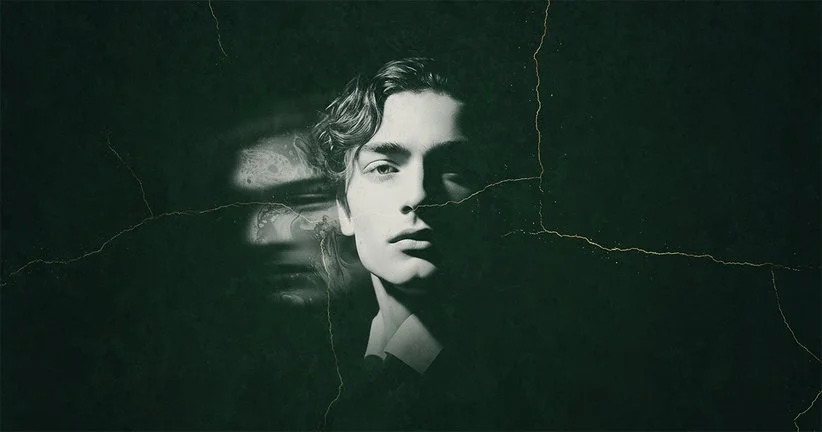
Many adaptations of Oscar Wilde’s classic have been put on stage, such as Sarah Snook’s Olivier Award-winning performance in 2024 at the Royal Haymarket. Seán Aydon adapts the story into a more traditional stage production, utilising a cast of seven to display the narrative. It is notable that this is an abridged adaptation, specifically in the reduced number of characters from the original text, alongside scenes that are fleshed out more than others. Overall, this adaptation has moments that shine with ingenuity, offering a fresh take on the themes and spirit of the novel that forces the audience to question their own morality through this allegory. Whilst there is no doubt that this vision is understood by the creative team, the execution is, at times, let down by the writing, and at other times, by the directorial choices—particularly within the second act.
Aydon’s adaptation of the text stems from an obvious passion for Wilde’s writing. However, it is perhaps this passion that obscures the message the production tries to convey on stage. The dialogue, at times, attempts to force in too much of the original text, which makes it difficult to follow and leaves the audience missing some of the intended meaning.
Jack Crumlin conveys the eponymous Dorian Gray with triumphant confidence; the arc of his downfall is demanded in the second act, which Crumlin delivers in spades. He is supported closely by an ensemble, with Mark Hawkins as Lord Henry Wotton and Mark Oxtoby as Basil Hallward both delivering passionate performances. The female characters, played by Ayesha Griffiths, Lydia Whitehead, and Lydea Perkins, are all well delivered given the depth of the script, though it is unfortunate that their roles are written in quite a passive and limp manner. Additionally, the direction for some of the more comedic scenes feels off-key in its timing, specifically in the scene between Dorian Gray and Lady Victoria Wotton.
Commendations must be given for the set design (Sarah Beaton) and lighting design (Peter Small), which are stupendous. The patina of the large mirror, alongside the sublime use of Newton bulbs across the stage, makes the production feel as if the audience is deteriorating alongside Dorian Gray’s departure from humanity.
A definitive issue lies in the inconsistency of period settings across the production. Nearly all characters wear period costume, yet this is inconsistent: some characters appear in modern dress, such as Catherine Vane in a modern-looking top, contrasted with Lord Henry Wotton in Victorian suits. Alongside this, the props in Dr Ellen Campbell’s morgue—including a modern lamp and contemporary details—cause the timing of the depicted world to contradict itself. If this choice is intentional, it unfortunately waters down the surrounding universe of Victorian London.
Overall, the performances in this production supersede the writing, and at times the staging shines as brightly as the 2024 production with Sarah Snook. However, the script itself needs further amending and trimming, as scenes tend to run too long and the story in act two becomes hazy. This is a very enjoyable production that deserves further sanding to become a diamond. If judged on performances alone, this production would gain an extra star, but it would be better served by a more refined script.
Review: Anthea Arpad