
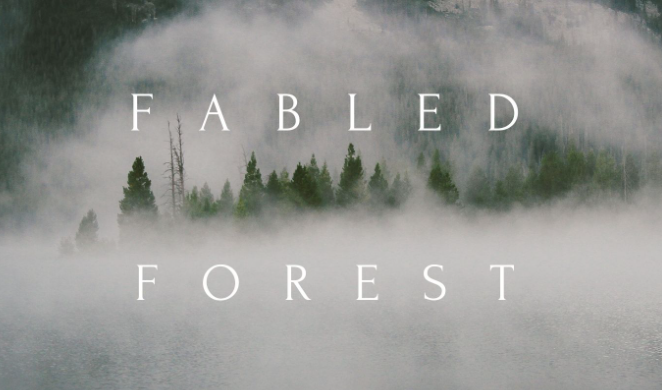
It's not often that reviewing theatre involves leaving the city behind and heading into the natural beauty of Epping Forest. Fabled Forest offers exactly that: a 50-minute audio walk through Wanstead Park accompanied by a specially composed album inspired by, and dedicated to, the surrounding forest.
A group of around 20 of us gathered at the edge of the forest, where we were given headphones and some instructions for the experience. There was to be no talking during the walk, allowing us to immerse ourselves fully in the continuous soundscape, which would conclude as we reached the end of the route.
Created by composer Marissa Landy in collaboration with her father, electroacoustic composer Leigh Landy, Fabled Forest marks their first musical collaboration. Marissa's compositions are written for an unusual combination of marimba, vibraphone, harp and piano, and are interwoven with Leigh's electroacoustic transition pieces created from sounds recorded in the forest. Marissa's own spoken words are also woven through the piece, guiding us through the landscape.
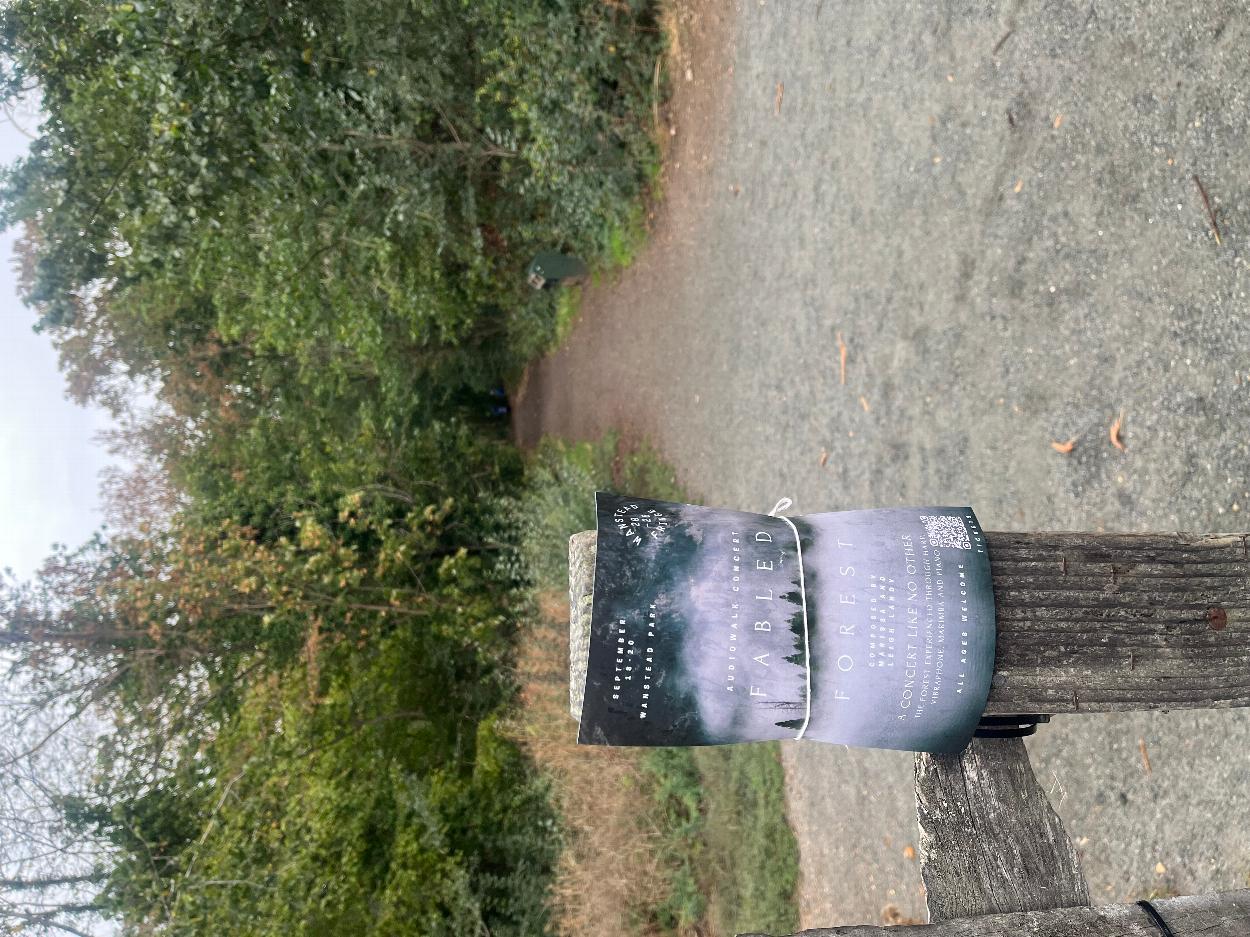
The combination produces an intriguing sound world. These aren't songs in a conventional sense, but compositions that shift in mood and atmosphere, moving between delicate, contemplative passages and more rhythmic and percussive sounds.
What is particularly clever is the relationship between the soundtrack and the route. The music has been developed to correspond with where you are physically walking, changing as you move between open spaces and more enclosed areas of the forest before arriving beside a large lake alive with birdlife. What you hear and what you see are designed to become a single experience.
The route itself is beautifully chosen. Over the course of the walk we encountered surprisingly varied environments, giving the soundtrack an ever-changing natural backdrop. At its best, Fabled Forest encourages you to notice the landscape differently. With headphones on and conversation removed, your attention turns to the trees, changing light, open expanses and wildlife, while the music adds another emotional layer.
But, the execution of the walk itself significantly undermined what should have been one of the experience's greatest pleasures.
Before setting off, we were told (as well as in the advertisement for the event) that this would be a slow walk, with plenty of pauses to take in the scenery and opportunities to sit and enjoy the surroundings. We were also told that Marissa would be carrying the transmitter for our headphones, requiring us to remain together as a relatively tight group.
That technical restriction was already a little disappointing. Surely part of the pleasure of an experience such as this is being able to stroll through the forest at your own pace, allowing the music and surroundings to wash over you. But what followed was even more surprising.
Marissa positioned herself at the front and set a remarkably brisk pace. Rather than a contemplative stroll through the forest, at times it felt closer to a military march. Apart from one short pause beside the lake, the promised opportunities to stop, sit and properly absorb our surroundings simply didn't happen.
This wasn't just frustrating; it worked directly against the artistic intention of the piece. There were moments when, rather than looking up at the forest and concentrating on the music, the priority became keeping up with the group. Where were the opportunities to simply stand still, listen and look?
There is an accessibility consideration here too. I attended with an older person who is still very mobile and walks at a good pace, yet she felt pressured to walk faster than she was comfortable with. On wet and uneven forest ground following rain, that is not ideal from either an accessibility or safety perspective.
Given that the transmitter dictates the range of the group, it would seem more logical for whoever carries it to remain towards the rear, allowing the pace to be determined by those walking more slowly. Deliberate pauses could also become part of the artistic structure — moments where the music, spoken word and a particular view are allowed to come together without the audience simultaneously worrying about moving on.
And that is what makes the issue particularly frustrating: Fabled Forest has created precisely the kind of environment in which you want to linger.
There is a distinctive and thoughtful experience at the heart of Fabled Forest. The route is excellent, the idea of composing an album around a physical journey through the forest is compelling, and the combination of acoustic composition, electroacoustic sound and spoken word gives the work its own identity.
But when you invite an audience into a forest to experience music and nature together, you need to give them the space to actually experience them. Less marching and considerably more meandering would have made Fabled Forest a much more immersive and affecting journey.
Review: Karen Jemison