
Neil Simon’s coming-of-age comedy gets a remarkably sharp production from Sedos, where great ensemble acting, tight character work, and clever staging lift the show far beyond typical amateur fare and straight into West End territory.
Set in 1937 Brooklyn, Brighton Beach Memoirs follows teenager Eugene Jerome as he navigates girls, family tension, and his dream of becoming a writer—all against the backdrop of the Great Depression and the rising threat of war in Europe. Beneath the punchlines, Simon captures the messy realities of home life and the awkward transition into adulthood.
Director Nick Mouton grounds the show in genuine feeling. The cast doesn't just play these roles; they sink into them, backed by sharp accents, natural mannerisms, and period-accurate costumes from Azid Alysum. Nothing feels forced or performed for effect; instead, the characters appear to have stepped naturally from Simon’s pages.
Daniel Cox plays Eugene Jerome with the necessary combination of adolescent self-importance, curiosity and vulnerability. As the young would-be writer observing his family, Cox provides the audience with a natural entry point into the story. Yet his performance never dominates the production, and that is important. Eugene may be the central character, but this is unmistakably an ensemble piece.
Renée Foster's Kate Jerome is convincingly formidable and maternal, while David Pearson's Jack provides the quieter paternal centre of the household. Carly Garrod brings warmth and vulnerability to Blanche Morton, with Natasha Keith and Isobel Lawson giving Laurie and Nora Morton their own distinct personalities and rhythms.
Barnaby Howe's Stanley Jerome provides another important dimension to the family dynamic, bringing credibility to Stanley's frustrations and responsibilities. Taken individually, each performance is assured; taken collectively, they are considerably more impressive.
Yet this is not a production where one performer steals the show. The achievement is collective. Cox, Foster, Garrod, Keith, Lawson, Howe and Pearson work together with such consistency that they cease to feel like seven actors and instead become a believable family.
The real beauty of the performances is that the actors do not simply act the lines, they live them. Conversations feel spontaneous, reactions instinctive and emotional shifts completely natural. Simon’s dialogue sounds as though it is being spoken for the first time rather than recited from a script. That level of truthfulness is what makes the comedy land and the more poignant moments resonate.
Adam Coppard’s set realisation is equally effective in its simplicity. The clever design allows the audience to see both the upstairs and downstairs of the house simultaneously, creating a strong sense of a crowded family home where privacy is almost impossible. It also provides opportunities for visual comedy, overheard conversations and parallel action without unnecessary scene changes. Saskia Van ’t Hoff and Lloyd Smith’s lighting complements this smartly, pulling focus upstairs or downstairs as needed, or illuminating both levels to draw visual parallels.
The script itself has a few minor flaws—the episodic pacing drags at times, and Eugene’s teenage fixations occasionally run long—but Mouton’s direction keeps things moving. He avoids leaning into heavy-handed comedy or sentimentality, letting the humour stem naturally from the characters while keeping the looming world events subtly grounded in the background.
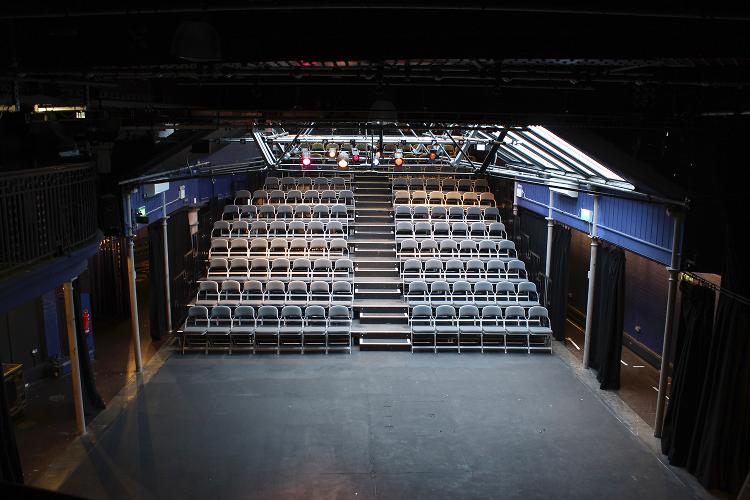
The Bridewell’s intimate setting works to the production's advantage, placing the audience close enough to catch every subtle glance and silence. Sedos may be an amateur company, but this production proves that the gap between amateur and professional often comes down to funding, not talent.
Sedos may describe itself as an amateur theatre company, but there is nothing amateurish about the standard achieved here. The distinction between amateur and professional theatre can sometimes come down to resources rather than talent, and this production makes that abundantly clear.
Brighton Beach Memoirs is a warm, funny and ultimately moving portrait of an ordinary family facing an extraordinary period in history. More importantly, this production demonstrates just how powerful theatre can be when an entire company commits wholeheartedly to the world of the play.
Brighton Beach Memoirs runs until 12 September.
Review: Jason Lane