
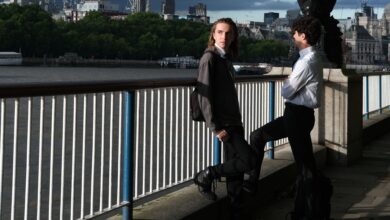
Broken Boys is a new comedy-drama about the lives of two secondary school boys, Tom and Michael, who appear to be opposites but both struggle with their gender identity and sexuality. The play follows their own sides of the story, starting with a secret changing room encounter at school and then leading them to form a bond over the lockdowns after sixth form, and later leading to love, arguments, questioning, and toward their ill-fated ending.
The way the story was told was unique in that the two boys talk to an ominous third person (directed to the audience) about the events that then unfold on stage and their thoughts and feelings about that. The therapist was in the background at her desk during the entire production. Having her in the background made it seem like the boys were recounting their emotions in a therapy session. It would then switch to the boys actually in the scenes bouncing off each other with their interactions - desire, anger, and confusion are all thrown together in their expressions and language.
The play shines a light on the romanticisation of closeted love and high school bullies in TV. Michael comments on Heartstopper, and they both comment on society’s perception of gender, gay men, boys being allowed to show emotion, and toxic masculinity. It explores queer TV tropes but uses the stereotypical bully-to-lover storyline to dissect these topics in more depth and to kind of poke fun at it too, especially in relation to the modern gay relationship, incorporating the use of phones, drag, and the lockdown.
As a gender queer director, Robin Halliday ‘wanted the audience to come away from the play with an understanding of the pressure that we put on gender.’ They definitely achieved this goal, with the way Michael struggles with his own identity and feeling misunderstood even by Tom, who battles with his own feelings of queerness. However, the story itself didn't stand out as too different from the common queer love stories we see on TV. The only difference with Broken Boys is that the writer Liam David Malcolm comments on these stereotypes in tandem with the character's story, and doesn't give them a ‘happy’ or glorified ‘coming out and accepting ourselves’ ending.
The staging was well-designed with the bench always being visible, part of the boy's first encounter. Chairs, an airbed, and the wardrobe are used as shifting props. A digital screen at the back showed the scenes year, and the quick dimming and re-bursting of the light enabled a smooth transition between these scenes too.
Broken Boys is funny with its playful use of modern phone messaging scenarios, for example. Yet, it is also moving and dramatic in the way it pokes fun at glorified queer love in TV and the way both actors strongly bring their characters to life with emotive movement and dialogue.
The story itself could have been more fleshed out with more scenes of the boys' romance blossoming and showing more ‘love’ towards the boys to give the story more depth. The ending too felt a bit over the top drama-wise when their relationship didn't feel as fleshed out as it could have been.
Broken Boys is playing at The Hen and Chickens theatre until 16th August 2026.
Review: Cara-Louise Scott-Lapish