
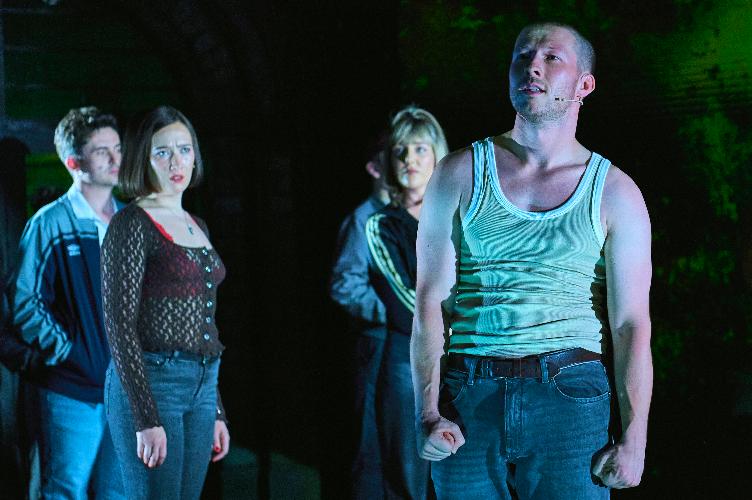
Irvine Welsh has spoken proudly about how Trainspotting wouldn't be a "cheesy musical" with songs crowbarred into the story. Ironically, that is exactly what this production has done. The book and film tackle many difficult subjects such as heroin addiction, HIV and cot death – these subjects were followed by a song and dance number which were reminiscent of the musical Mr G put on about drugs in the Summer Heights High series. When known and beloved existing works are transferred onto the stage, there must be enough artistic merit to justify the work itself more than just nostalgia - Trainspotting The Musical will make audiences leave and still wonder ‘why is this a musical at all'.
The story follows a gang of friends living in Edinburgh, narrated by its protagonist, Renton (Lewis Kidd), who dominates the stage throughout. Followed by his friends, Spud (Kieran Andrew), Tommy (Finlay Paul), Franco Begbie (Frankie O'Connor) and Sick Boy (Sheridan Townsley). All of which go through various scenarios explained throughout the film and book – but with little arc between them in terms of a plot that feels like it's moving forward. On the screen this translates well, however, for the stage, we seem to go from one scene of getting high on heroin, then a concerned parent, to then another petty crime committed in the city of Edinburgh.
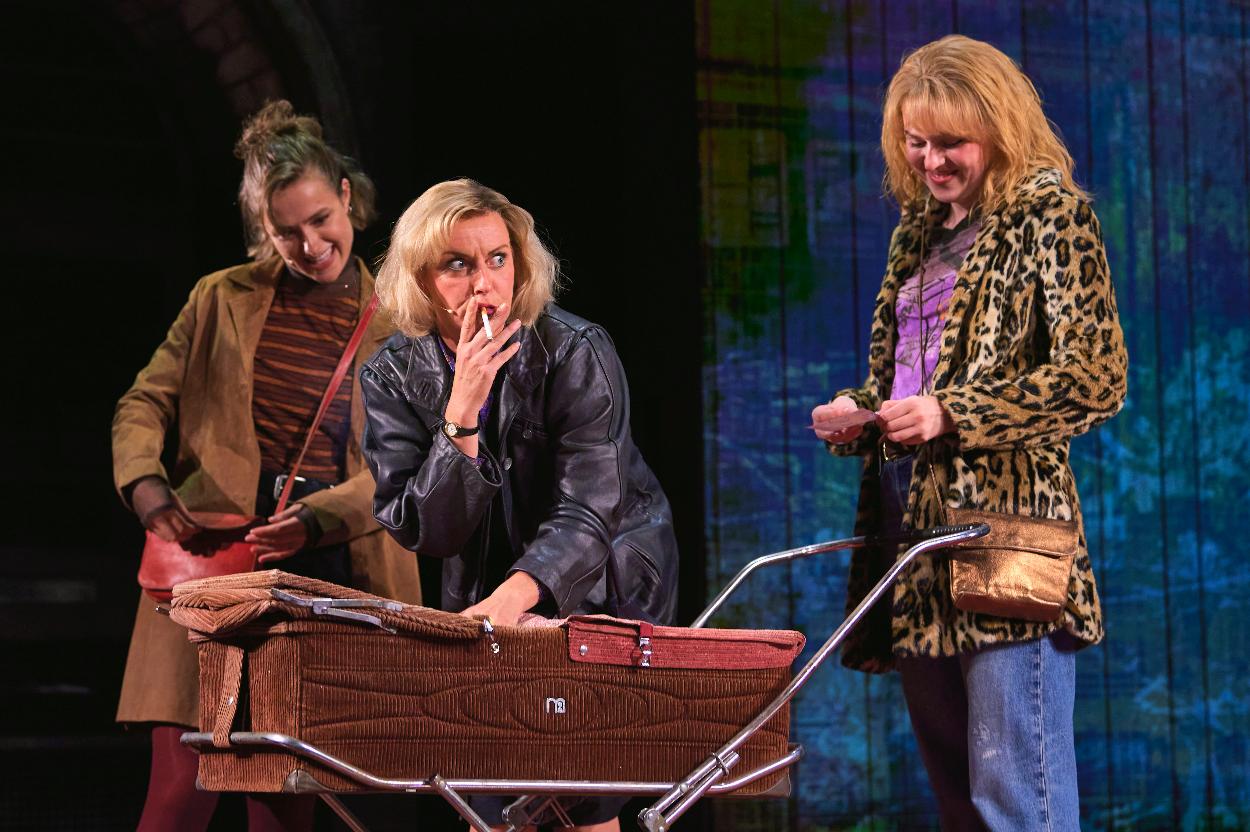
However, the cast work tirelessly to inject life and energy into the production, but they are ultimately let down by Caroline Jay Ranger's direction and choreography alongside a poor stage adaptation. Too many scenes are ‘back-acted' due to the blocking and possibly the set. It is a shame that the production's greatest strength, a very talented cast, is underwhelmingly used with little to no creativity from the other formats.
The original musical score fares no better. With music and lyrics by Stephen McGuiness, it shows his musical experience is lacking in this new genre of musical theatre. The handful of new songs are bland, forgettable and often lacking soul. A very simple melody in the songs performed by a supremely talented cast is akin to owning a rocket ship and only using it to do the weekly shop. A song should start in a musical because words alone won't satisfy the emotion of the scene and the character's journey – yet this was musically uncomplicated and rarely deepened the emotional landscape of the scenes they were in or to follow. Rather than advancing character or story, they frequently slotted on the end of a scene, reinforcing the feeling that the musical elements have been added because they had to be there to call it a musical, rather than because they belonged there.
However, one of the few moments where the musical number earns its place comes with Bittersweet Symphony, which came as a surprise when it seemed the cast were able to utilise their musical theatre talent. This was one of the few examples of a song making sense to the story.
Equally frustrating is the criminal underuse of Melanie Marshall as The Call of Heroin. A role with enormous theatrical potential is left largely unexplored, while Sheridan Townsley proved to be a phenomenal singer – was also underused vocally.
The set design by Colin Richmond is conceptually interesting but visually static. With little variation or dynamism, relying heavily on projection, each location blending into the next, leaving scenes feeling flat and always at the back of the stage.
The story is at its strongest when it returns to Irvine Welsh's original writing. The poetic rhythm of the dialogue and narration reminds the audience why Trainspotting became culturally significant as a book and a film. The iconic "Choose Life" philosophy—an invitation to reject the banality and hopelessness of existence in an impoverished Scottish city—still resonates with remarkable power, but doesn't go much further than this and certainly does not belong in the West End.
It runs until 5 September. Tickets: here.
Review: Anthea Arpad Photos: Matt Crockett