
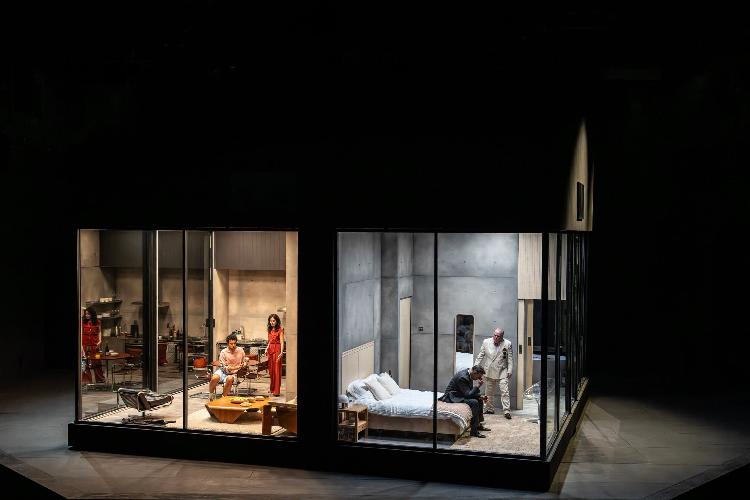
First things first: the show's runtime is nearly four hours. In an age where many people can't get through a thirty-second video on social media without our thumbs twitching to scroll away, committing to that long in a theatre seat feels like a proper challenge. But does it pay off. Simon Stone's Oresteia is a massive wake-up call for our modern, fractured attention spans. It proves that when theatre is this good, it can teach us a real lesson in focus. You don't even think about your phone: the time just absolutely flies by.
You're immediately sucked into this gripping, modern-day Greek myth about the Middletons, a twin-celebrating, ridiculously wealthy British family whose lives are completely shattered by a single, devastating tragedy. It sets off this brutal, decades-long cycle of secrets, revenge, and family bloodshed. David Morrissey plays the dad, Christopher, who is carrying this heavy, exhausting guilt and trying to hide it behind a tough exterior.
His wife, Montie, is played by the brilliant Mary-Louise Parker, who is just mesmerising as she slowly unravels from cold, passive-aggressive resentment into absolute, terrifying grief. It isn't long before their kids get dragged right into the mess. Tom Glynn-Carney is incredible as their traumatised son Augie, a complete live wire of raw, unpredictable manic energy, and Rosie Sheehy is fantastic as Alice, bringing this painfully awkward, dark humour to a girl who is totally lost in her family's shadow. Along with Rakhee Thakrar as the hauntingly gentle Chandra, they genuinely feel like a real, deeply messed-up family tearing each other apart.
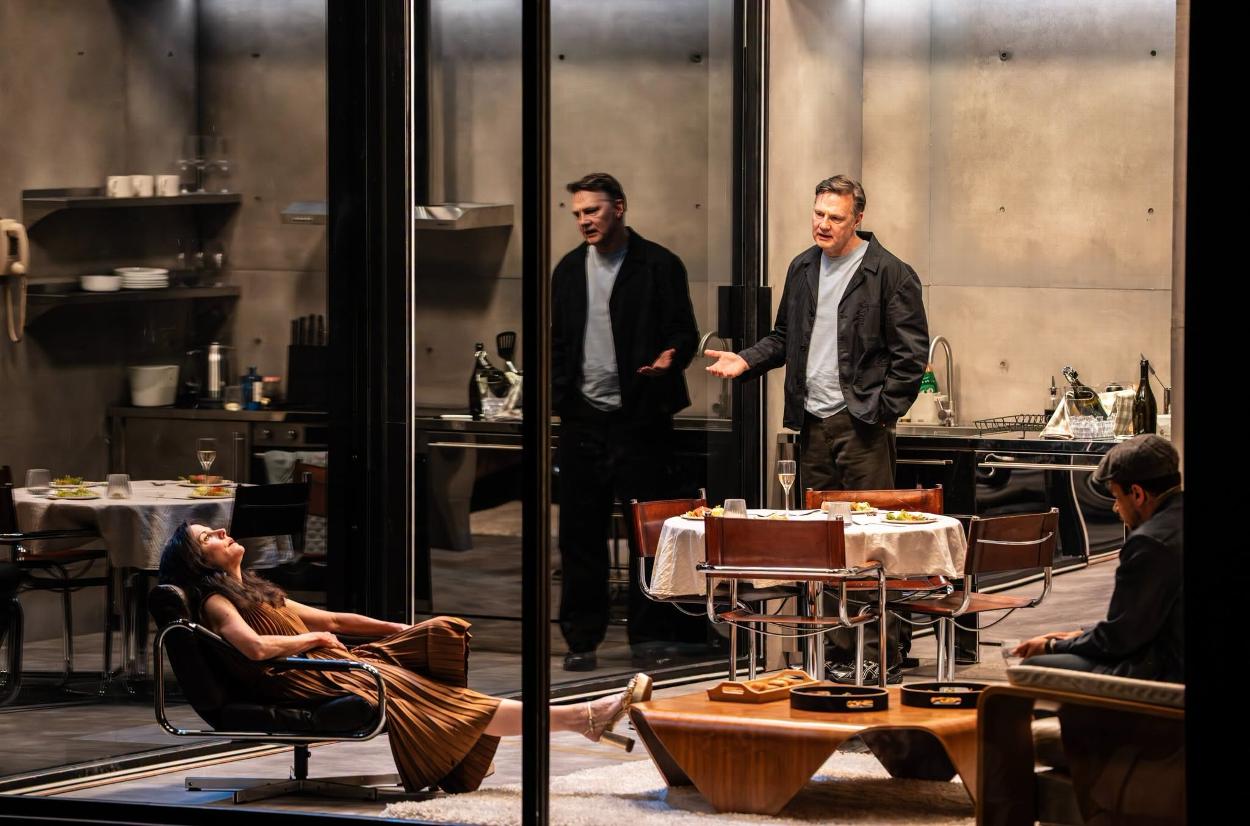
Lizzie Clachan's set design is a reason why the tension never lets up. She's built this sleek, rotating glass and concrete cube that feels less like a traditional stage and more like some high-end, terrifying human terrarium. As this massive box spins, it sickeningly shifts between posh dinners and gruesome, blood-stained crime scenes. Stone's directing is incredibly sharp and chaotic—the dialogue overlaps and escalates so fast it makes your chest tight. And this is the main flaw of this play: the dialogue is so fast-paced, and, especially in the first act, so overlapping, that often I found myself straining to catch what was actually being said, the emotional charge outpacing the clarity of the text.
It's a long, heavy night, and it doesn't give you any easy answers or happy endings. It's a Greek tragedy, after all. You would not expect anything less.
It runs until 19 September. Tickets: here.
Photos: Johan Persson