
I’m Not Being Funny by Piers Black arrives at the Bush Theatre to plenty of laughter and warm applause.
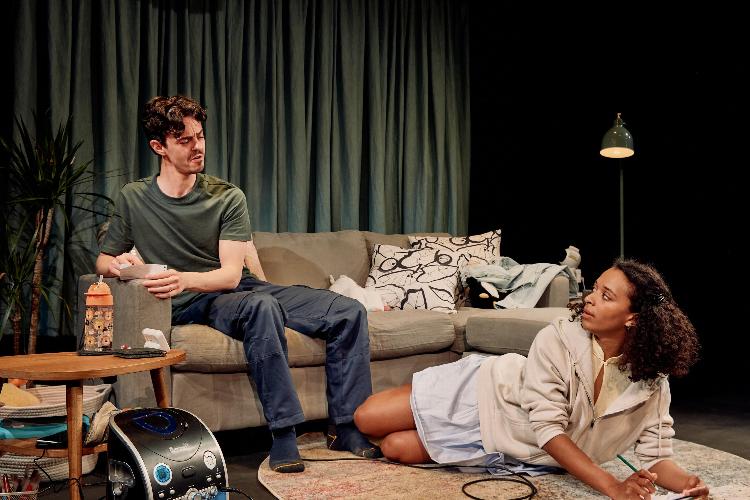
Set inside the cluttered living room of a small flat full of children’s toys and karaoke equipment, the play balances comedy and heartbreak perfectly.
Parents Peter (Jerome Yates) and Billie (Tia Bannon) are trying to put together a “Tight Five”—a five-minute comedy routine for the friends and family they have invited over. But the set isn't just for their guests; it is also an attempt to make themselves, and more importantly their daughter, Ruby, laugh during a difficult time, as Billie faces terminal cancer with only a few years left to live.
As material for their routine, the pair revisit defining moments in their relationship: their first meeting, first dance, first kiss, and first flat. What begins as sweet nostalgia gradually shows the cracks within their relationship. Through these memories, the audience pieces together the couple's history while tension grows beneath the jokes.
Jerome Yates and Tia Bannon give very natural performances, showing the humour, warmth, and closeness of a couple who are not only in love but are also best friends. Their chemistry feels real, making the play’s emotional shifts even more powerful. The production captures the familiarity of long-term relationships well—the type of couple you both like and envy. However, as the memories move closer to the present day, the comedy begins to turn into something more painful. Conversations about parenthood, their daughter in the next room, and Billie’s illness push the pair into uncomfortable territory.
The structure is what makes the play so interesting. Piers Black’s decision to frame the story around stand-up sets allows humour and grief to work together naturally. The writing gradually reveals their history, keeping the audience on edge as every new joke threatens to expose another difficult truth.
The production team also deserves credit for the world they create. Under the direction of Bryony Shanahan, the pacing moves well between moments of chaos, tenderness, and silence. Meanwhile, the set design by Amelia Jane Hankin is full of thoughtful detail: the baby monitor is a constant reminder of their daughter’s presence, while the karaoke machine highlights the play’s themes of performance and distraction.
The production's ability to make comedy feel necessary rather than just an escape is particularly effective. The humour never takes away from the seriousness of Billie’s illness; instead, it’s how the couple survives it. By the end, the play leaves the audience feeling emotionally drained in the best way—laughing, uncomfortable, and deeply moved all at once.
Funny, painful, and very human.
It runs until 13 June.
Review: Kenndrick Horton Photo: Rich Lakos