
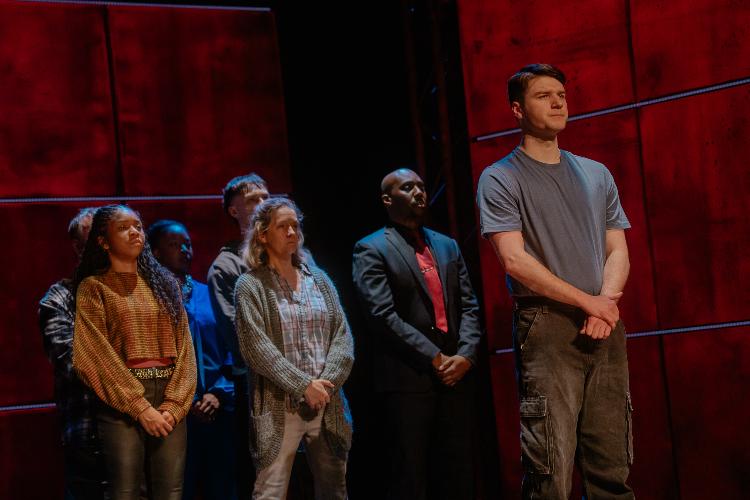
Malorie Blackman's Noughts and Crosses is a timeless tale of the destruction caused by racism, authoritarian governmental control and the effects of a crippling class system from the very moment we are born. With 2 clear-cut sectors of society: the noughts, a lower socio-economic group with little or no access to education and influential opportunities vs the crosses: a group that control the governments, the law courts and who call all the shots.
Sabrina Mahfouz's adaptation gives us a strong empathy for the role reversal of the discriminated minority from BIPOC in our deeply uncertain reality, to the white majority in Blackman's dystopian warning. The reversal of the prejudice is a stark reality check of the current and horrific imbalance of privilege that we all responsible for; I recommend ‘Me and White Supremacy' by Layla Sayaad as a start.
Directed by Esther Richardson, the piece peaks prematurely with a high-octane tension quite early on. This tension doesn't seem to abate as those sympathetic with the ‘noughts' and those with the ‘crosses' are regularly arguing emphatically. The moments of empathy and connection from the ‘star-crossed' lovers is a much-needed respite. However, with the poignancy of the text, this intensity is certainly justified, if a little relentless.
The ensemble, consisting of: Melody Adeniran (also Minnie), Daniel Copeland (also Ryan), Brianna Douglas (also Sephy), Fintan Hayeck (also Jude), Chris Jack (also Kamal), Emma Keele (also Meggie), Lewis Tidy (also Callum), and Elexi Walker (also Jasmine) create a flowing theatrical world of the respective ‘noughts' and ‘crosses' households with the challenges of indoctrination vs injustice. Simon Kenny's use of the space is creative, with ‘abstract design and minimal furniture' navigated by bodies of the ensemble, in a somewhat traditional educational setting clearly aimed at a teenage demographic (as intended by Blackman).
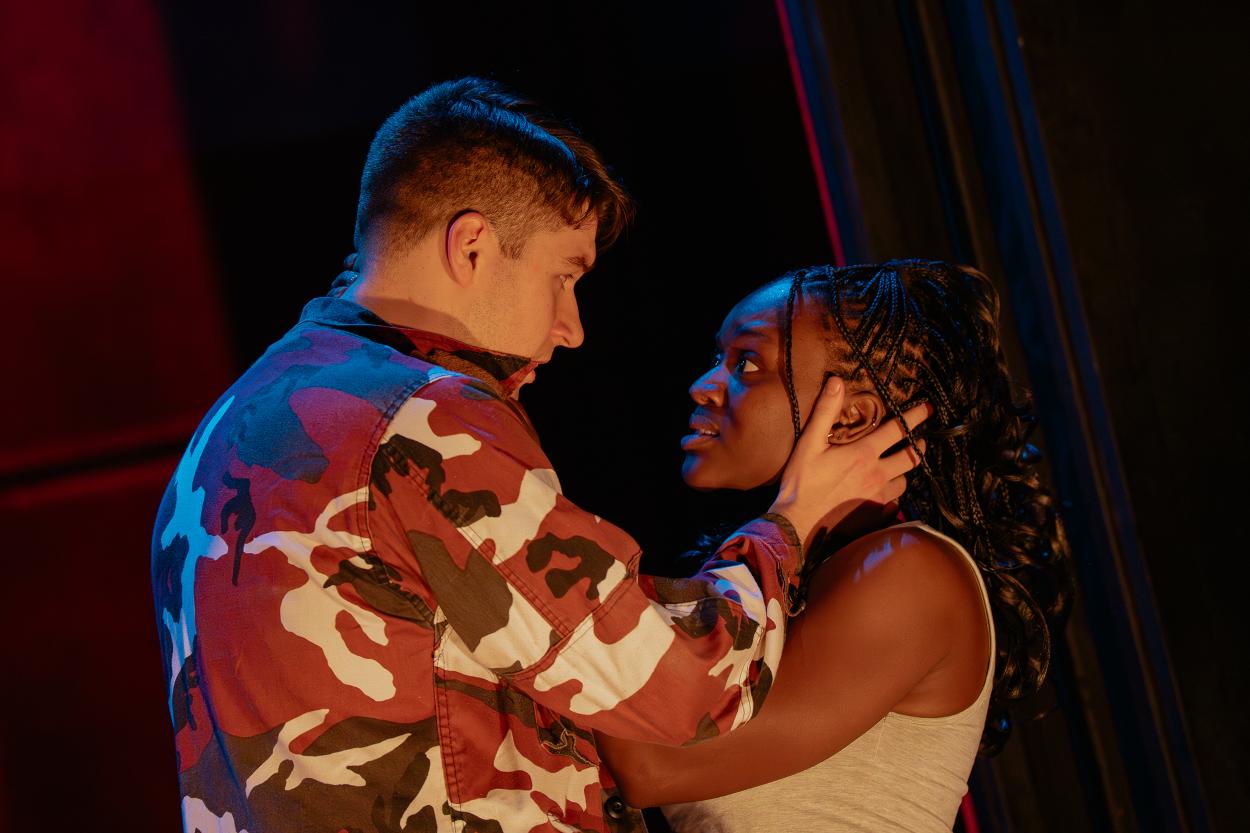
Pilot Theatre's tour (in association with Northern Stage) is immediately relevant in a time when political far-right fascism fuels racism through indoctrination and hatred. The show is maintaining the conversation amongst teenagers and younger people who will inherit the shortfalls of decisions and actions made by those that have come before them. But it is also a reminder of the power of compassion and respect in times when often it feels there is no hope.
Review: Sebastian Calver