
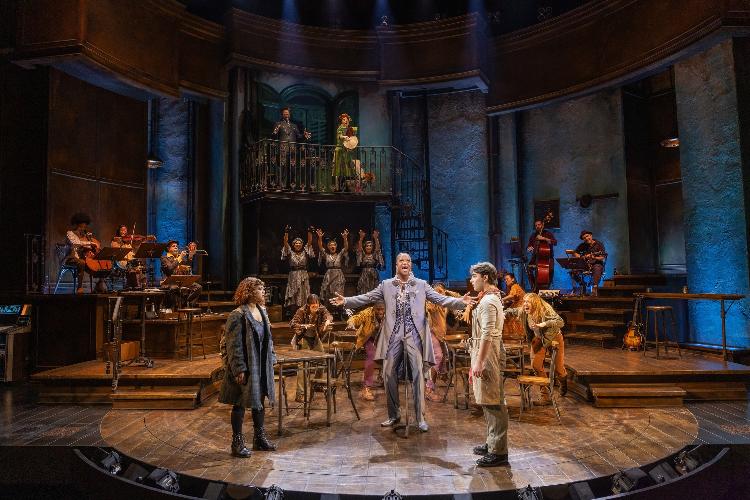
Hadestown continues its West End run with a newly refreshed cast, bringing a distinct energy to its bold and musically rich retelling of a classic love story. From the moment the show began, the atmosphere inside the Lyric Theatre was energised, with a buzzing audience whose enthusiasm carried through to a standing ovation.
The show reimagines the Greek myth of Orpheus and Eurydice, guided by the ever-present Hermes (Clive Rowe). While the story is well-known to many, those less familiar may find it takes time to fully grasp, as the narrative leans heavily on its mythological roots and abstract style. At its core, it is a tragedy, yet the production captures the message of choosing to sing the song anyway, even when we know how it inevitably ends. As a fully sung-through production with very little spoken dialogue, it asks the audience to stay closely attuned from the outset.
Act 1 unfolds within a static, tavern-style set, requiring the audience to rely on lighting effects and imagination to transition between worlds. While this stripped-back approach allows for creative staging, it can at times make the storytelling feel unclear. However, Act 2 benefits from a stronger sense of place as the contrast between the "upstairs" jazz club vibe and the "downstairs" industrial factory comes into focus, making the narrative easier to follow and more engaging. The pacing feels well-judged overall.
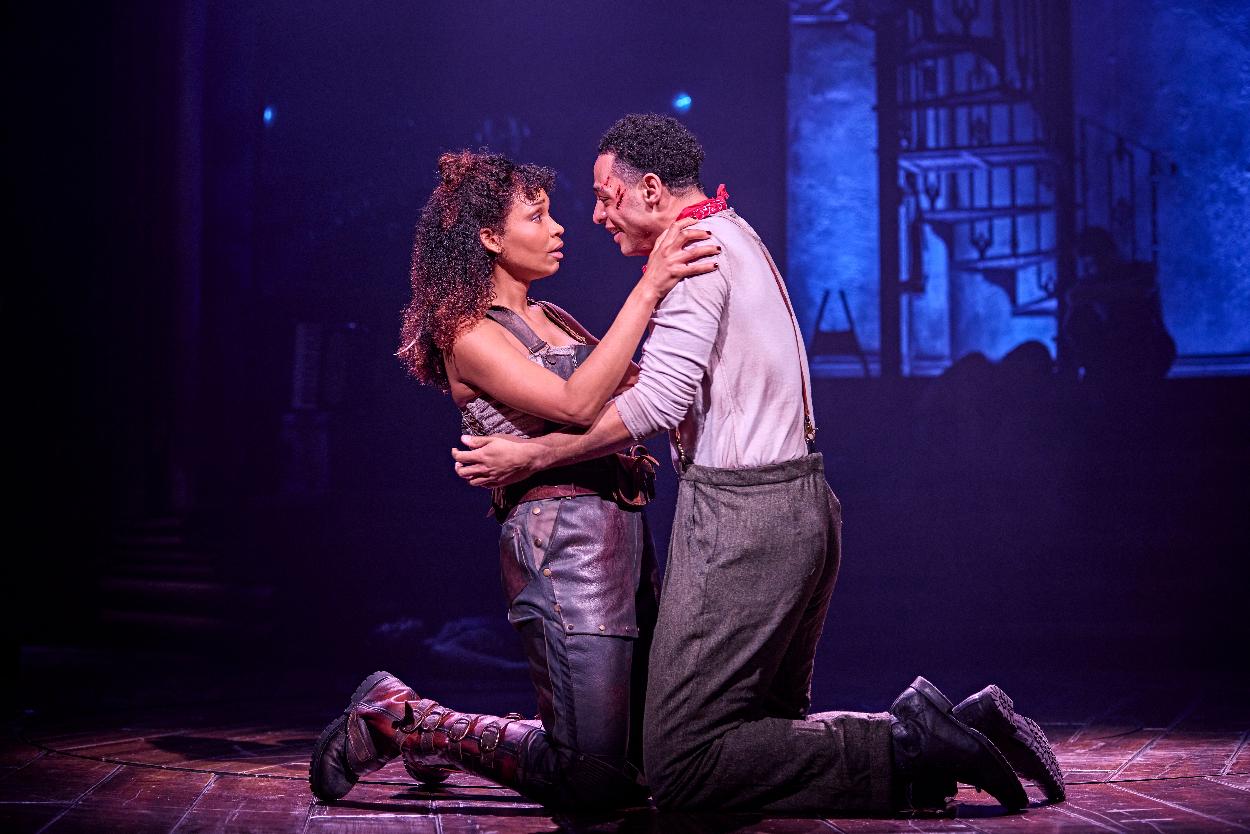
The cast delivers strong performances throughout. Marley Fenton's Orpheus is vocally impressive, particularly in “Wait for Me,” one of the production's most striking moments. Bethany Antonia brings warmth and emotional clarity to Eurydice, making her journey easy to connect with. Rachel Adedeji's Persephone commands attention with powerful vocals, while Alastair Parker's Hades carries a quiet intensity. Clive Rowe's Hermes is a highlight, guiding the audience with charm and ease. The small but mighty ensemble make a strong impression, throwing themselves into every moment, with the Fates delivering haunting, otherworldly vocals that elevate the production.
Musically, the show is a clear strength. Numbers such as “Wait for Me” and “Why We Build the Wall” - which highlights Hades' control and themes of isolation and greed - anchor the story at key moments, with “Wait for Me” delivering a visually and emotionally impactful turning point.
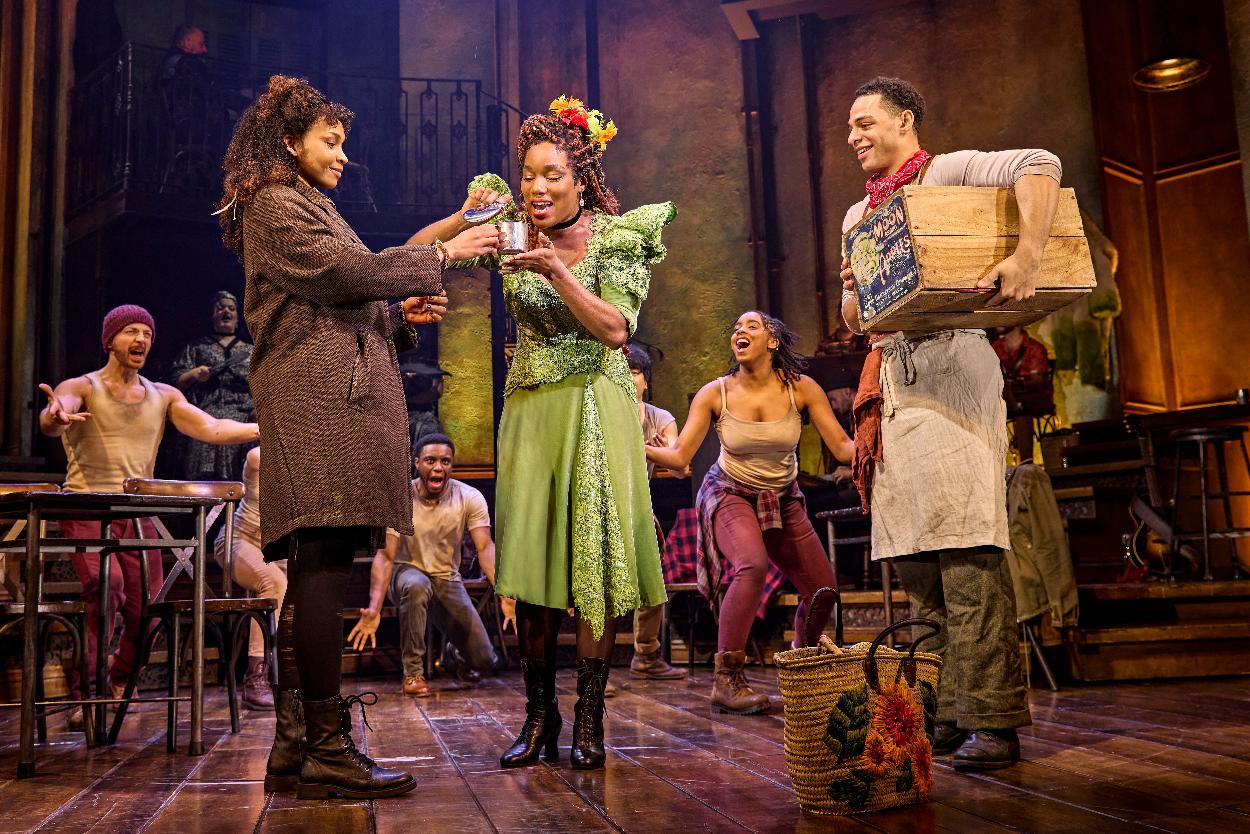
For much of the show, the staging remains intentionally static, relying on clever use of props, a stage lift, and occasional movement to support the narrative. While this suits the production's style, there are moments where stronger visual storytelling would help improve clarity.
Overall, Hadestown is a musically compelling and thoughtfully performed production that offers a different kind of theatrical experience. While its storytelling style may not resonate with everyone, particularly those who favour more traditional or spectacle-driven musicals, it remains worth seeing for its performances and unique approach, despite its occasional lack of clarity. Fans of more stripped-back, narrative-led shows such as Come From Away are likely to find much to appreciate.
It runs until 13 December. Tickets: here.
Review: Alistair Lowe Photos: Brinkhoff-Moegenburg